
Warsaw, 13 March 2026
A political clash over EU defence financing has erupted in Poland after President Karol Nawrocki vetoed legislation enabling the EU SAFE loan mechanism, citing sovereignty risks and long-term debt concerns. Prime Minister Donald Tusk vowed to proceed regardless, launching the “Polska Zbrojna” programme through a government resolution to secure defence funding and maintain Poland’s role in strengthening NATO’s eastern flank.
Prime Minister Tusk: We will not be stopped by the veto. We will implement the “Polska Zbrojna” programme
“I address all Polish women and men. Yes, we have reasons to be concerned. Yes, the world looks with astonishment at how such an opportunity can be wasted. We will not allow this,” said Prime Minister Donald Tusk, referring to yesterday’s veto of the SAFE bill. Poland urgently needs to strengthen its defence capabilities; therefore, the Council of Ministers adopted a resolution at an extraordinary meeting on the “Polska Zbrojna” programme. The resolution authorises the Minister of National Defence as well as the Minister of Finance and Economy to sign the agreement concerning SAFE. “This is an unprecedented revolution that will bring development to hundreds of Polish companies and will allow us to build genuine sovereignty when it comes to Poland’s security,” the Prime Minister said. History will judge the President’s harmful decision.
The President has complicated – but not stopped – the modernisation of the army
Yesterday, the President announced in a national address that he had vetoed the SAFE bill.
“People are wondering today whether the President’s decision amounts to betrayal, lobbying pressure, or simply a lack of common sense. One thing is certain – the absence of the President’s signature is a serious obstacle to the implementation of the programme for the modernisation of the Polish armed forces,” said Prime Minister Donald Tusk.
The Prime Minister stressed that despite the veto, the government will continue actions aimed at implementing the SAFE programme and securing funding for Poland’s security. The money will not be lost because the government is launching a “Plan B.” For this reason, a special meeting of the Council of Ministers was convened today.
Europe looks on with astonishment
The SAFE programme originated from an initiative by Poland, which had been lobbying for months for its launch within European institutions.
“The SAFE programme was created in Poland. In May 2024 we asked the European Union to launch a defence programme for the entire Community. From that day onwards we have been persuading our European partners of this idea every single day,” Donald Tusk emphasised.
The decision to reject the programme has caused astonishment in many European capitals. SAFE is supported by NATO countries and is intended to strengthen the security of the Alliance’s entire eastern flank.
“History will judge the President’s decision very quickly and in a very negative way. Our European partners do not understand why we rejected such a great opportunity,” the head of government said.
Poland is the largest beneficiary of SAFE. The country could obtain around €43.7 billion from the programme, or almost PLN 200 billion.
It will be more difficult and take longer – but it will succeed
Today the government adopted a resolution authorising the Minister of National Defence and the Minister of Finance and Economy to sign the agreement concerning SAFE and to implement the “Polska Zbrojna” programme.
“It will be more difficult and sometimes slower. Much greater effort will be required to convince everyone involved in this process, because the relevant legislation will not exist. We will have to rely on our own strength, our own energy and our own determination. But we will do it, and this resolution will allow us to launch the ‘Polska Zbrojna’ programme. This is our response,” said the Prime Minister.
Hundreds of billions for the Polish army and domestic companies
The “Polska Zbrojna” programme is based on the European SAFE instrument, which was created at the initiative of Poland and the NATO countries on the Alliance’s eastern flank.
“The ‘Polska Zbrojna’ programme, based on a cheap and favourable European credit instrument, was intended to finance massive procurement for the Polish armed forces as well as for the Border Guard and the Police. Above all, it was meant to be an unprecedented stream of money flowing to Polish companies, rather than to German, U.S. American, or Korean firms,” the Prime Minister stressed.
The majority of the funds — as much as 89% — were intended to go to Polish defence companies and firms cooperating with the defence sector, strengthening the country’s industrial capacity and creating new jobs.
A “dangerous charade” used as a pretext
The Prime Minister also referred to arguments presented by the President and by the leadership of the National Bank of Poland regarding alternative financing for the programme.
“I listened to the proposal from the President and from President Glapiński. There was nothing truthful or reliable in it. A very dangerous charade was invented in order to provide an alibi for this veto,” said Prime Minister Donald Tusk.
As the head of government noted, the funds from the SAFE programme constituted a real and immediately available source of financing for the modernisation of the armed forces and the development of Poland’s defence industry.
The government will not waste the opportunity to modernise the army
The government will not allow a programme of strategic importance for national security to be blocked.
“I address all Polish women and men — yes, we have reasons to be concerned. The world looks on with astonishment at how such an opportunity can be wasted. But we will not allow this,” Donald Tusk emphasised.
The Prime Minister announced that the government will launch the “Polska Zbrojna” programme on the basis of a government resolution, ensuring that despite the difficulties the financing of key security-related investments will continue.
More information
Disclaimer: E-translated by ChatGPT, prompted by Insight EU. This English translation is provided for informational purposes only. In the event of any discrepancies or legal interpretations, the original Polish version shall prevail and is the only legally binding text.
Source – Government of Poland
Polish President: Veto of the SAFE loan law
Warsaw, 12 March 2026
President Karol Nawrocki refused to sign: The Act of 27 February 2026 on the Financial Instrument for Increasing Security (SAFE).
In his address, President Karol Nawrocki announced that he would not sign the law allowing Poland to take out a SAFE loan. “SAFE is a mechanism in which Brussels, through the so-called conditionality principle, may arbitrarily suspend financing while our state would still be required to repay the debt. Therefore, it must be said clearly: security under conditions is not security. Poland’s security cannot depend on decisions taken elsewhere,” he argued.
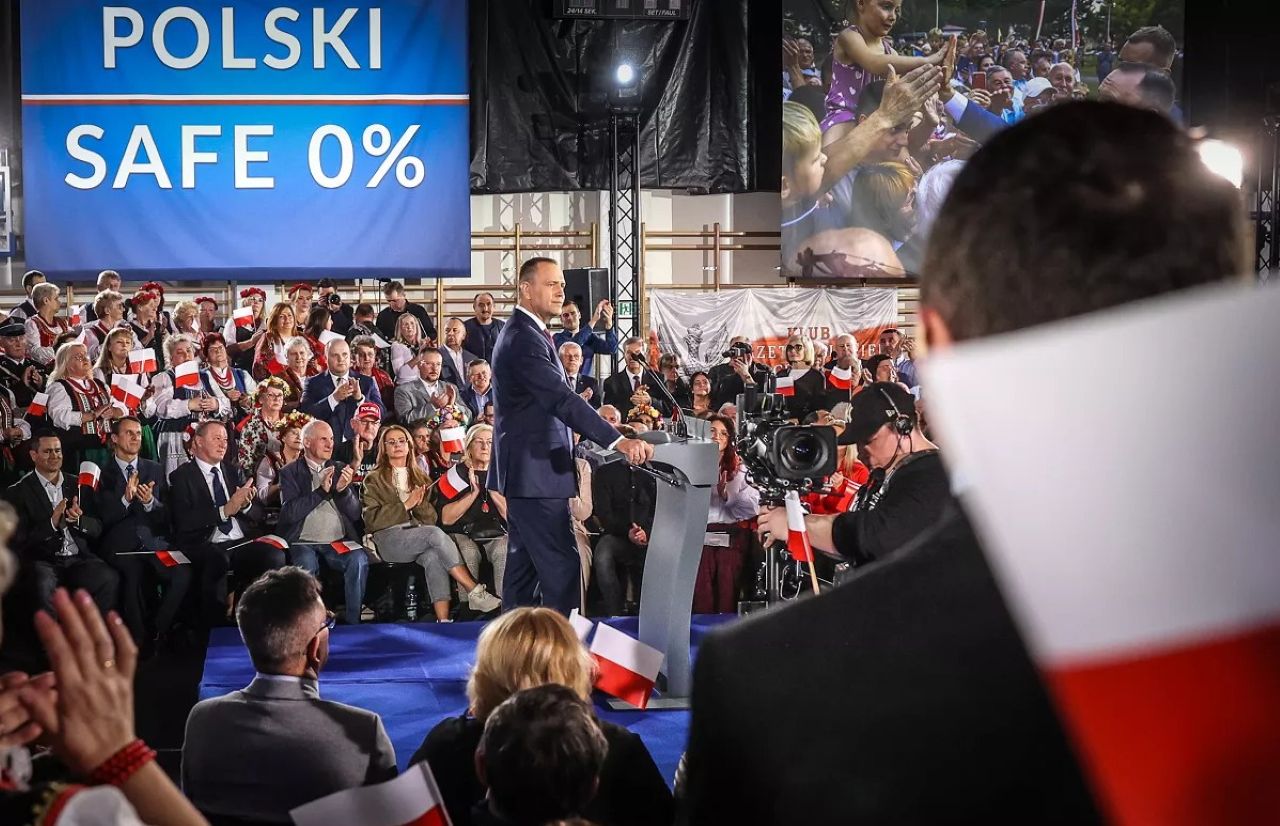
At the same time, on Tuesday the President submitted to the Sejm a draft law on the Polish Defence Investment Fund. On that day, Karol Nawrocki discussed the details of the proposed solution with the Prime Minister as well as the Ministers of Defence and Finance. The legislative initiative establishing the Fund implements the concept of a “Polish SAFE at 0%.”
Disclaimer: e-translated by ChatGPT, prompted by Insight EU. This English translation is provided for informational purposes only. In the event of any discrepancies or legal interpretations, the original Polish version shall prevail and is the only legally binding text.
Source – Chancellery of the President of the Republic of Poland
Address by the President of the Republic of Poland related to SAFE
(As published in English by the Chancellery of the President of the Republic of Poland)
Ladies and Gentlemen,
In the world full of tensions and uncertainty, any decision concerning the security of the state must be taken with Poland’s long–term interests in mind — with tomorrow in mind, not only what is “here and now.” This was the thinking that guided our community when we decided to accede to NATO, a decision whose 27th anniversary we celebrate today.
A bill has been placed on my desk concerning the European SAFE mechanism is to consider facts above day–to–day politics. The issue of entering the European SAFE loan scheme is not in the hands of a single party or government, nor is it a matter for a single term in office. The future of the Polish state is at stake.
From the outset, the SAFE project has raised many questions and doubts. This is why I convened a dedicated session of the National Security Council to discuss the topic. I held a number of meetings and talks with experts, and I initiated special amendments to the relevant law to be adopted in the legislative process. I deemed it necessary to engage in broad–based, non–party dialogue. Unfortunately, most of the submitted amendments were rejected; the politicians opted for confrontation rather than dialogue. Even worse, a decision was taken to exploit this debate to exacerbate the polarisation of public opinion and create divisions among the Polish people. This is exceptionally harmful and, quite simply, unwise. People must finally realise that ruining agreement on such fundamental issues goes against Poland’s interests. The only people who will rejoice over this are our enemies.
Ladies and Gentlemen,
The SAFE mechanism involves massive foreign lending taken out for 45 years and denominated in foreign currency. The interest incurred could amount to as much as 180 billion zlotys.
Thus, the Polish people will have to repay another amount equal to the value of the loan, whereas Western banks and financial institutions will profit from it. This situation is comparable to loans in Swiss francs. Initially, everything was supposed to be safe, but later instalments soared sky high, triggering off substantial financial crises.
Politicians who want to take out a SAFE loan must remember that it will burden our children and grandchildren for years to come. An 18–year–old who is just starting out in adult life today will need to repay the debt incurred on their behalf. One can take out a loan in a matter of days, but it will take a whole generation to pay it back.
History teaches us a simple lesson: nations that refuse to fund their own army will, sooner or later, end up funding a foreign one.
This is why defence spending is essential, but it must be implemented wisely, with a sense of responsibility and without compromising state sovereignty. I have therefore proposed an alternative to the euro–based SAFE facility: the Polish SAFE 0% and the Polish Defence Investments Fund. A bill to this effect has already been submitted to the Sejm and should be considered as soon as possible. Partisan vociferousness and postponing the debate act to the detriment of the Polish armed forces and Poland’s security.
Recently, the National Bank of Poland earned Poland more than 185 billion zlotys, thanks to an increase in gold reserves and sound investment decisions, among other things.
This is a considerable sum. It is capital that can work for Polish security. Thanks to it, we will not need to take out uncertain foreign loans for generations. The fund will operate under the full control of the Polish state and parliament, in cooperation transcending political divisions and with full transparency in the disbursement of funds.
This solution gives us complete decision–making freedom. Poland will decide what equipment to buy, from whom to buy it, and how to develop its defence industry.
The problem with the SAFE Euro–loan is not just about money. It is also about principles. Our security will not be solely in the hands of the Polish authorities.
SAFE is a mechanism through which Brussels can withhold funding at will, based on the so–called principle of conditionality, and our country will still have to pay this debt. Therefore, it must be made clear that security on condition is not security. Poland’s security cannot depend on foreign decisions.
As President of the Republic of Poland, I must ask a fundamental question: is a solution that could restrict the state’s sovereignty in security matters compatible with Poland’s Constitution?
Article 90 of our Basic Law allows the transfer of certain competences to international organisations. However, it also clearly states that competences that form part of a state’s sovereignty cannot be transferred. One of these is control over the armed forces. This is also confirmed by European treaties.
These are fundamental issues. Taking this into account, I have decided that I will not sign the law allowing Poland to take out the SAFE loan. I will never sign a law that threatens our sovereignty, independence, or economic and military security.
I would like to make it clear that any attempt to burden our country with foreign debt in an extra–legal manner, through the backdoor, will face political and legal accountability sooner or later.
I would like to remind those in power of Article 7 of the Constitution of the Republic of Poland, which clearly states that “organs of public authority act on the basis of, and within the limits of, the law.” This means that public authorities may act only to the extent permitted by law.
Ladies and Gentlemen,
I am appealing to all political forces to work urgently on the President’s bill for the Polish Defence Investments Fund. This will allow the army’s development to be financed at a level equal to or higher than that of the European SAFE. This project will ensure a strong army without leaving future generations in debt. Poland’s SAFE of 0% means zero dependence and 100% sovereignty.
Ladies and Gentlemen,
Poland must arm itself. Poland must build a strong army. Poland must be one of the pillars of security in Europe and NATO. But Poland must do this on its own terms.
Only a nation that can take care of its own security remains truly free.
Poland first! The Polish People first!
May be of interest to you
More information
- Presidential Bill on Polish Defence Investments Fund
- President puts forward the proposal of a “Polish SAFE 0%”
- The Session of the National Security Council
Source – President of Poland