
Brussels, 14 November 2025
The European Commission hosted the Pre-Steering Committee meeting of the European Connected and Autonomous Vehicle Alliance (ECAVA) on 28 October 2025. Organisations interested in joining ECAVA may apply until 30 November to take part in the first wave of working groups. Numerous applications have already been received and are currently under review, reflecting strong interest in the initiative.
The first meeting, opened by Executive Vice-President Henna Virkkunen, gathered high-level representatives from 26 leading European automotive companies and associations to define the Alliance’s strategic priorities. It followed the launch of ECAVA by President Ursula von der Leyen on 12 September, as part of the Industrial action plan for the European automotive sector.
ECAVA aims to strengthen Europe’s competitiveness and digital sovereignty, focusing on key technologies for the vehicle of the future. The Alliance will act as a strategic advisory forum, fostering collaboration on software, chips, AI and autonomous driving, accelerating innovation and deployment.
Participants welcomed the timely launch of ECAVA in a context of growing competition from non-European actors and geopolitical instability affecting automotive supply chains. The meeting showed a strong interest to collaborate in the following areas:
- Software-Defined Vehicles (SDV): scaling up the common open-source ecosystem, targeting rapid industrialisation, and exploring collaboration on non-differentiating building blocks in application domains like autonomous driving.
- Automotive Hardware: reinforcing capacities through enhanced cooperation on computing platforms and chiplets, in coordination with the Alliance on Processors and Semiconductor Technologies.
- Artificial Intelligence and Data: promoting the joint development of AI models and data sharing, leveraging AI Factories.
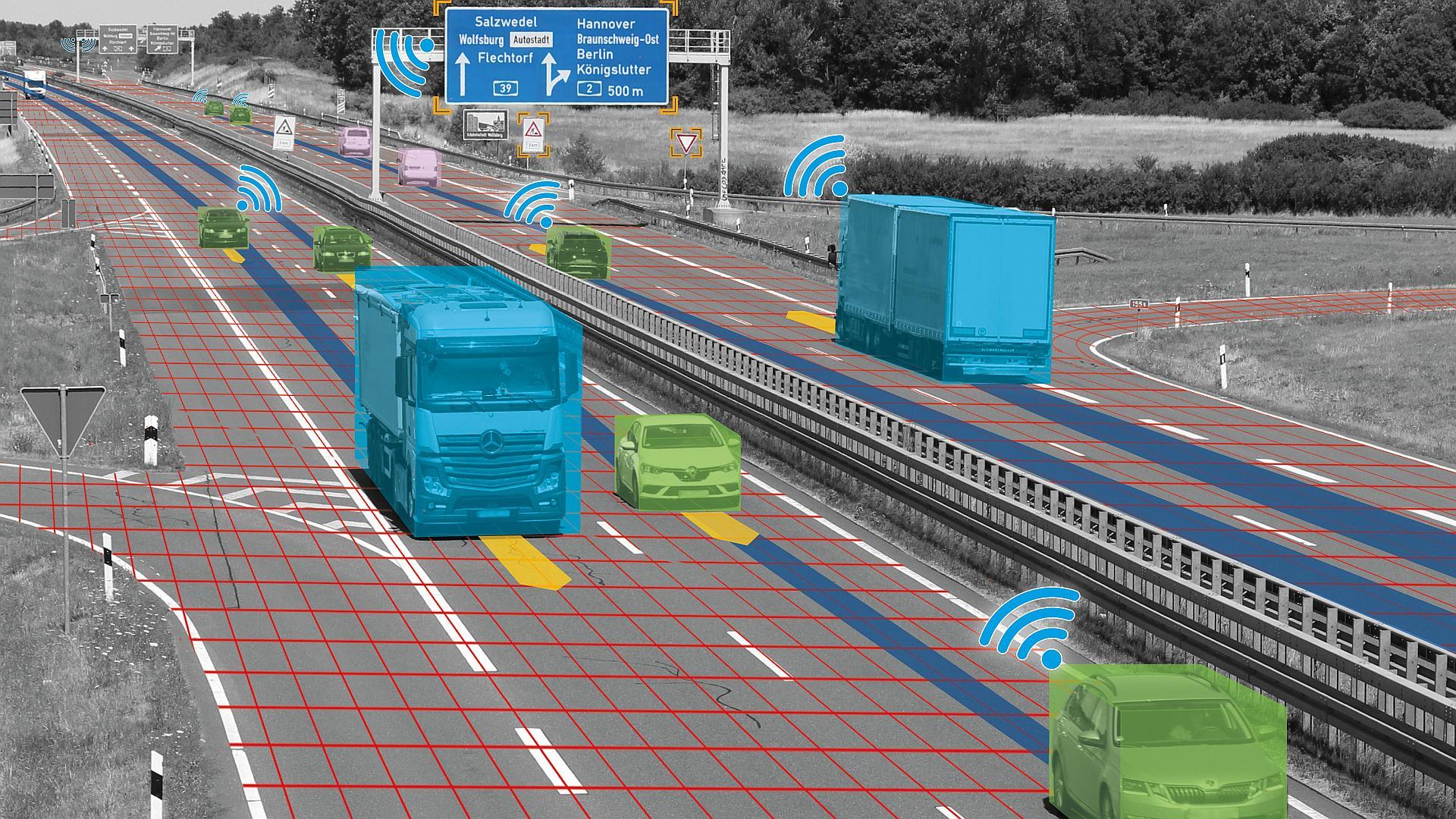
- Autonomous Vehicle Deployment: accelerating autonomous vehicle deployment under the Autonomous Drive Ambition Cities initiative announced in the Apply AI strategy, as part of the large-scale cross-border testbeds announced in the Automotive Action Plan.
These activities will be taken forward by thematic ECAVA working groups. ECAVA will also provide targeted input on regulation and on upcoming initiatives such as the Large-Scale Demonstrators under the Connected, Cooperative and Automated Mobility (CCAM) Partnership, research and innovation under the next multi-annual financial framework, the Chips Act 2.0 and potential Important Projects of Common European Interest (IPCEIs) on AI and on Clean, Connected and Automated Vehicles.
To support the initiative, the Commission has launched calls under the Digital Europe Programme on 4 November 2025 to fund an ECAVA Secretariat and a new collaboration platform for the vehicle of the future.
More information
- ECAVA page
- ECAVA Application form
- Industry Software Defind Vehicle Roadmap
- Industry Hardware Roadmap
Source – EU Commission
Background on the European Connected and Autonomous Vehicle Alliance (ECAVA)
The European Connected and Autonomous Vehicle Alliance (ECAVA) is an industrial discussion and advisory forum that brings together key stakeholders from across the automotive value chain, including vehicle manufacturers, suppliers, technology and tool providers, and smaller innovative tech companies and start-ups.
Main purpose
The overall objective is to coordinate and accelerate technological developments and investments in software-defined, AI powered, connected and autonomous vehicle technologies as defined in the Alliance Terms of Reference by companies and research and technology organisations active in the sector in the EU, including smaller European actors, to reinforce the industry’s competitiveness and technological sovereignty.
ECAVA’s activities will be focusing on near-term EU-driven collaborations in software-defined vehicles (SDV), hardware computing architectures and automotive electronics, AI models, and the development, piloting and testing of autonomous driving. ECAVA will thus shape EU cooperations in all these areas, as well as in related standardisation activities.
This cooperation is needed for the European automotive industry to oversee progress and provide strategic guidance for technological developments and cooperation between automotive stakeholders in both European and global markets. The Automotive Action Plan, announced in March 2025, announced the creation of a European Connected and Autonomous Vehicle Alliance (ECAVA). This cooperation will enhance and foster synergies across existing and future EU initiatives and beyond.
ECAVA will be a lean and outcome-oriented working structure. It will be governed by a Steering Committee, driven by the industrial priorities of the automotive sector. The European Commission will be part of the Steering Committee and will provide a supporting secretariat which will organise the operations of the Alliance, including thematic Working Groups, and an Alliance Forum.
Who can join and how?
Any organisation with relevant existing or planned activities in the areas of software-defined AI-powered, connected and autonomous vehicles, associations, and research and technology organisations, can join the Alliance, subject to meeting the Terms outlined in the Alliance Terms of Reference. They can do so by signing the Alliance Declaration and filling in the Alliance application form. Application for the Alliance remains open indefinitely and organisations may apply and join at any time. The European Commission and Member States will act as observers to the Alliance and the Working Groups.
The Steering Committee Members of ECAVA may establish Working Groups of the Alliance, working on specific industrial priority topics of the automotive industry. Proposals for such Working Groups may also be provided by the European Commission or participating Member States.
Once accepted as members and participants within the Alliance, organisations can join one or more Working Groups to actively contribute to the objectives and deliverables set out by those Working Group(s). The European Commission acts as a facilitator to the Industrial Alliance, promoting its activities.
Source – EU Commission