
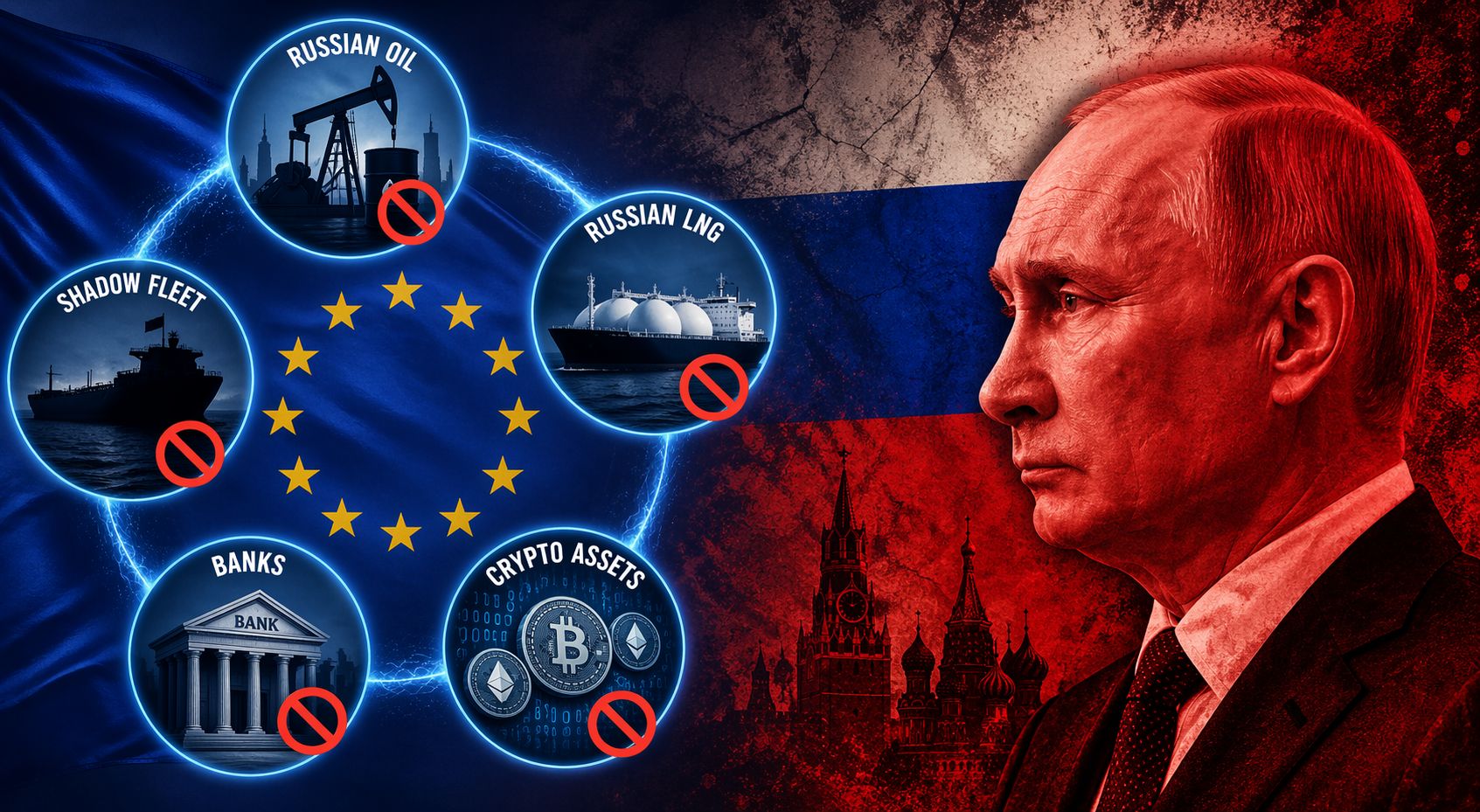
Germany has blamed Russia for the Leipzig hybrid attack and announced new diplomatic, migration, intelligence and sanctions measures. Foreign Minister Johann Wadephul said Berlin would close Russia’s Bonn consulate, terminate the Russian House lease and intensify pressure on Moscow’s shadow fleet. Hours later in Bishkek, Vladimir Putin rejected Germany’s accusations, linked Berlin’s actions to domestic politics and warned of retaliation against further Ukrainian attacks. In a wide-ranging press conference, Putin also addressed Ukraine, CIA contacts, Armenia, grain exports, British military targets and relations with Japan.
Statement by Foreign Minister Wadephul at a joint press conference with Interior Minister Dobrindt
Foreign Minister Wadephul issued the following statement at a joint press conference with Interior Minister Dobrindt on 1 September 2026:
The dangerous conduct of the Russian Federation described just now is part of a long series of attempts to destabilise, spread disinformation, threaten, sabotage and show aggression towards Europe. Unfortunately, Germany is no exception here. Russia’s leadership is treating our country with blatant hostility. I would like to emphasise that this state of our relations is not in the interests of the Federal Government.
We expressly regret that this is the case. Since the beginning of the illegal war of aggression against Ukraine, we have underscored time and again that our objective is to bring the war to an end, to restore the peaceful order in Europe and to return to constructive relations. However, this requires a minimum level of willingness to do so on the part of the Russians. We must acknowledge that Russia is displaying no willingness to compromise.
On the contrary, with the attempted attack in Leipzig, Russia’s leadership has instead made a conscious decision to inflict further significant damage on our bilateral relations, which are already under tremendous strain. The Federal Government’s line, which the Federal Minister of the Interior has just mentioned, thus applies. Germany remains secure, and Germany is defending itself against opponents who seek to spread insecurity. The Federal Government is therefore taking action against Russia as the perpetrator of the hybrid attack in Leipzig.
In doing so, it is making it more difficult to carry out further hybrid measures in Germany and Europe. Germany has strong partners. The Federal Government is liaising closely with its partners in NATO and the European Union. It has their support and is supporting them for its own part. Germany is staying the course in its security policy. The Federal Government is resolutely continuing to support Ukraine and to strengthen Germany’s defence capabilities. Hybrid attacks such as the one in Leipzig show that this is necessary.
In addition to bolstering our security, the Federal Government is implementing measures against Russia. I have ordered the following measures to be taken in consultation with the Federal Chancellor: the Russian Consulate General in Bonn will be closed as of 18 September. The lease for the Russian House in Berlin will be terminated. Within the European Union, we will propose new listings of Russian individuals in the context of hybrid attacks. We will tighten immigration controls for Russian nationals.
We will step up the pressure on Russia’s shadow fleet. Furthermore, the Federal Government will continue to advocate for unity within NATO and the European Union. It is informing its partners and has been assured of their solidarity. And the Federal Government’s course in the area of security policy also remains clear. It will continue its civilian and military support for Ukraine. Moreover, it will take further measures in the intelligence sector.
The Federal Government will likewise continue its efforts within NATO to strengthen its own defence capabilities and to provide an effective deterrent for Russia. The Federal Government will notify Russia of this via the appropriate channels. I have therefore ordered the Russian Ambassador to be summoned. This summons is taking place as we speak.
Ladies and gentlemen, our message to Russia’s leadership is clear: we are resolutely staying the course as regards our security policy actions. The attack in Leipzig highlights how urgent this is.
We will not allow ourselves to be divided in our social cohesion or be intimidated by Russia’s attacks. We remain ready to respond resolutely together with our strong partners whenever we need to do so to protect the population and our partners. And we will resolutely continue to show our solidarity with Ukraine in its battle to defend itself against Russia’s war of aggression.
Thank you very much.
Source – Foreign Ministry of Germany
Russian President Vladimir Putin: Verbatim press conference statements following the Shanghai Cooperation Organisation (SCO) meeting in Bishkek
Bishkek, 1 September 2026, 23:45
Concluding his working visit to Kyrgyzstan, Vladimir Putin answered questions from representatives of the Russian media.
Vladimir Putin: Good evening!
Perhaps I should begin by thanking the President of the Kyrgyz Republic and all his colleagues for what they did to organise the SCO summit. It was a major undertaking. Some facilities, as those of you who have been here before probably noticed, were built specifically for this event. Everything was done very well, to a high international standard; organisationally, everything was impeccable, and important documents were adopted. I would like to congratulate the President of Kyrgyzstan and his entire large team on this result. That is what I wanted to say at the outset.
Please, I will be happy to answer your questions.
A. Nefyodova: Today, in your speech, you noted that the SCO is the world’s largest regional organisation. In your assessment, what is the potential for its further expansion? Could there be new participants — new SCO member states? Or, on the contrary, is internal integration the priority now?
Vladimir Putin: Let me remind you that the SCO did not emerge spontaneously. It came into being after the collapse of the Soviet Union, and I have already spoken about this. It was created in order to prevent the possible emergence of border conflicts, incidents, unresolved issues, and to organise work primarily in this area, in the sphere of security. And all of this was done in a timely and effective manner and proved beneficial.
But it very quickly became clear that this platform could also be used to discuss other issues — not only security, but also economic development, the fight against organised crime, drug addiction, drug trafficking and terrorism, and later environmental issues and cultural cooperation. In general, the SCO began gaining strength and momentum. And it is no coincidence that other countries in the region wanted to join this organisation.
Today, it is one of the most powerful regional structures. I have already said this in a public statement — although I do not remember whether it was during the closed or the open part — but it represents more than half of the world’s population, or something close to that, I think about one third of global GDP. It has colossal reserves of natural resources, extraordinary logistics! In other words, it is half the world. And it is no coincidence that countries emerged that wanted to participate and work here as full members. As a result, there are now ten countries, and another 15 countries had joined in various capacities and had different statuses. They are all observers now.
Whether expansion is necessary and when it will happen depends on the decision of the organisation’s permanent members. But our general view is that we must not allow it to become amorphous, where it simply keeps expanding and countries or participants in this process appear that do not share certain common approaches or something of that kind.
Therefore, we support keeping this organisation open, and we support increasing the number of members. We agreed to do this gradually, without rushing. And those who come as observers should also understand where they are, what the principles of work here are.
But generally, why is it so attractive? It is attractive because everything is decided by consensus and on the basis of agreements. Nobody imposes anything on anyone here. This is a platform for developing common, joint decisions that should benefit all participating countries. And in that sense, I think it has good prospects.
O. Knyazeva: Today, any of our contacts with the United States attract a great deal of attention. The CIA director came and allegedly proposed trilateral Russia–US–Ukraine talks.
In your view, do we need any new formats for negotiations today, and perhaps new mediators, including among the Americans?
Vladimir Putin: First, contacts between representatives of the intelligence services always take place.
And, as you may have noticed, quite recently we handed over to the American side an American citizen who had been serving a prison sentence here. We handed him over because of his health and on humanitarian grounds. And he was some sort of ordinary guy, a drunk, a troublemaker, and his health was poor as well. Well, let him go home and get treatment.
That is the first point.
Contacts always exist and always have existed, even during the most difficult periods of the Cold War, and all the more so they take place now. Direct contacts are maintained between the heads of the intelligence services as well.
Do we need to broaden the number of participants? We are in favour of negotiations, any negotiations, being filled first and foremost with concrete substance. And if someone makes, or can make, a concrete contribution to this process, we are entirely in favour.
The only thing we would not want is for everything to go round and round meaninglessly. But if someone is capable of making some positive contribution to this negotiation process, which, as we understand it, is to a certain extent frozen today, then generally speaking we are not opposed. And here, of course, specialists are probably needed, military personnel and diplomats are needed.
Although we are completely comfortable working with the people whom we know well and whom we generally trust. These are people close to President Trump. In my view, they are sincere people and they are trying to give our work concrete substance. And the President [Trump] trusts them, which is very important, because without that it is completely impossible to conduct any negotiations. Because if they reach some agreement with us and then the number-one person filters everything they say and divides it by a thousand or more, then it is pointless. But as things stand, we understand that he trusts them.
Therefore, both Mr Kushner and Witkoff are always welcome guests here, and we work with them with pleasure.
P. Zarubin: Good evening! A few days ago, you drew a rather unexpected analogy involving killer whales, polar bears and the special military operation. So who was who there? Who did you have in mind?
Vladimir Putin: You know, it was spontaneous. It was at a meeting, I think at the Pedagogical University, completely spontaneous. And the killer whales, the bears…
If you are hinting that the killer whales represented the collective West, so to speak, I would say that a killer whale is, of course, a fearsome predator, but it is an intelligent animal, a clever one. As for the collective West, specific definitions were given to it back in Soviet times, definitions that remain alive to this day: the sharks of imperialism.
But as for the meaning, of course, you have more or less guessed it. What I was saying meant that if someone tries to drag us down the food chain and gobble us up, devour us, they may get a blow in the teeth. And Russia is prepared to do that, despite the rapidly growing appetites and teeth of those sharks.
V. Sineok: Also about the special operation. Russian troops are now pushing towards Kramatorsk and Slavyansk, and strikes on Ukrainian military targets continue. Has the turning point in this conflict already arrived, and will the enemy now, as they say, begin to crumble? Or is that moment still ahead? And what is the situation at the front now? How do you assess it?
Vladimir Putin: I have no doubt that the enemy will crumble. Questions of timing, deadlines, are always very complicated, and [these are] questions to which it is better not even to try to give specific answers in terms of timing or anything else. Because war is a brutal thing and difficult to predict.
But questions such as the ones you have just formulated always arise at any meeting with representatives of the media. So before entering this room, I went upstairs and literally just spoke with the Chief of the General Staff.
But I want to note that the information I receive comes from different sources, practically from all command bodies of the special services and our agencies that are involved in one way or another in the special military operation. Therefore, the picture — for me, at least — is a fairly objective one. So I have just received from him [V. Gerasimov], and from other colleagues, what they are reporting.
I would also like to add, of course, that combat operations in any case always mean losses, unfortunately; they always mean tragedies and always new challenges, especially now, during this period of rapid development of science and technology.
Today, the main challenge is, of course, unmanned systems, in every domain: underwater, at sea, on land and in the air. This is a serious challenge for us, and we are coping with it. I am certain that all tasks in this area will be resolved; I have no doubt whatsoever. I can see this from the pace being achieved by our defence-industry enterprises.
But it is not only that. You know, I was simply very pleased by meetings with representatives of small and medium-sized businesses and newly emerging engineering schools. The average age of our engineering specialists there is 35. I met them recently, and I was simply delighted and surprised, even amazed by this. So there is no doubt. In some areas we may lag behind, in others we may overtake the adversary, but we will certainly overcome all challenges and accomplish all tasks.
But the main thing I would like to say in answering your question is this: Russian troops, despite everything, are increasing the pace of their offensive in the special military operation zone. They are not simply advancing; they are increasing the pace.
The liberation of the Donetsk People’s Republic is proceeding according to plan. In August alone, I want to point this out, 270 square kilometres of DPR territory and 15 populated localities came under our control. What does this mean? What does it consist of?
Units of the Southern Group of Forces, I want to emphasise, are advancing confidently — precisely confidently — overcoming defensive lines and engineering fortifications and reaching — (addressing V. Sineok) you said “pushing”. Well, pushing or not pushing, under conditions of drone danger they are moving without haste, but they are reaching the eastern outskirts of Slavyansk and Kramatorsk and the southern outskirts of Druzhkovka, which are between one and a half and four kilometres away on different sections of the front.
Moreover, they are approaching Druzhkovka from different directions; troops are beginning to flow around it, so to speak, from the south and are approaching from the east.
The troops of the Centre Group are advancing simultaneously in several directions, also very important ones, and are engaged in street fighting to take the town of Dobropolye. This is an important and well-fortified logistics centre; long-term fortifications have been constructed there, both engineering structures and permanent fortifications. I will not talk about the forthcoming results, so as not to jinx them, but I am confident they will come.
Formations and military units of the West Group of Forces — I do not know whether this has been reported in the media or not — have blocked a large enemy grouping on the eastern shore of the Krasnooskol Reservoir, in the area of the settlement of Peski-Radkovskiye, and have begun destroying it. Thirteen AFU battalions, with a total strength — a large number — of about 5,000 men, are encircled.
This happened recently; I do not know whether the Defence Ministry has released [the information] or whether they have had time to do so. There are perhaps 4,500–4,800 [people] there, roughly speaking. Moreover, this encirclement has already physically taken place. In other words, this does not mean some areas are merely under our fire control; they have actually been physically encircled completely, and the encirclement ring is being tightened.
The offensive in the Zaporozhye Region is also being actively pursued. Formations and military units of the East and Dnepr Groups are advancing on a broad front towards Zaporozhye. In August, they liberated nine populated localities; fighting is under way in the central districts of the city of Orekhov. The guys are working calmly there, but very confidently.
The North Group of Forces continues establishing a security belt along the Russian-Ukrainian border in the border areas of the Sumy Region — there are 12 kilometres left to Sumy, to the Sumy ring road — and in the Kharkov Region. Over the past month, 14 populated localities have come under Russian troop control, including Kazachya Lopan, which has been liberated, and yesterday the city of Svyatogorsk.
In the north-eastern part of the Kharkov Region, another encirclement of another enemy grouping, numbering up to 2,000 people, has been completed.
The area of the pocket formed there is large — 460 square kilometres — and includes 27 populated localities. Eliminating it will make it possible to push the line of combat contact on this sector, in this direction, at least 20 kilometres away from the border areas of the Belgorod Region.
Let me remind you that these actions on our part were caused by the provocation by the Kyiv authorities involving the incursion into the Kursk Region.
Strikes continue against military targets, industrial enterprises, port and logistics infrastructure in Ukraine being used in the interests of the AFU — as is well known, in response to the Kyiv regime’s continuing attacks on civilian infrastructure and the fuel and energy complex, on Russian oil refineries.
During the night, I was told, a large number of drones again tried to break through the air defences of Moscow and St Petersburg; they also struck civilian facilities, including oil refineries. They tried to hit three refineries.
Bearing all this in mind — the strikes against Russia, against these facilities — the Armed Forces of the Russian Federation have been instructed to prepare and carry out massive strikes against Ukrainian energy facilities. They hit ours — they will get a response.
That is roughly how things stand.
A. Yunashev: May I clarify something else about drones?
Vladimir Putin: Yes.
A. Yunashev: Hello, Vladimir Vladimirovich!
The authorities of the Federal Republic of Germany have accused Russia over the drone incident in Leipzig, claiming that it was supposedly our drone carrying explosives. But the whole story there was rather murky. They have already terminated the agreement on the Russian House; they want to close our consulate in Bonn. And at the same time, just a few hours ago Zelensky directly began threatening our aviation, saying there is no place for civilian aircraft in skies where Ukrainian drones are flying.
How can you comment on this?
Vladimir Putin: The first part, concerning the actions of the German authorities: I think this is connected primarily with the domestic political situation. The Chancellor is in a difficult domestic political position; he does not enjoy the trust of his citizens, and it is clear why — because he does not defend national interests, but trades them away. There are obvious economic miscalculations: enterprises are closing, people are losing jobs, living standards are falling. It is unclear why all this is being done.
There is only one way to explain it: that it is necessary to oppose “aggressive Russia”. And where is the evidence? Well, now they have planted some evidence.
I want to remind you that quite recently — several months ago, perhaps at least a year ago — the German authorities accused Russia of blowing up the Nord Streams. Even then I was surprised that such nonsense could enter their heads, given that we are interested in selling gas to Europe.
Even now, we would be ready to supply it. All they have to do is press the button, make the decision to press the button. But they do not have the guts, because there are American sanctions there. That is all.
Fine. But now they have to explain the reasons for this behaviour in general. Given the decline in ratings and the forthcoming election campaigns, including in Saxony, for example, the question naturally arises about the political future of Germany’s ruling elite.
I think this is primarily connected with that. I think this is another mistake, a serious mistake, and in my view it clearly runs counter to the interests of the German people.
What was the second part, about the statement?
A. Yunashev: Zelensky said it is unsafe for us to fly; he is threatening us.
Vladimir Putin: I have not heard such statements, but if this was said publicly, then it is simply an application for state terrorism. And I would point out that they are asking us to resume negotiations, asking for personal meetings. You do not negotiate with terrorists — that is the first point.
And second, on the same issue: if, God forbid, such tragedies occur, we will find something with which to respond. Let no one doubt that.
G. Ivanov: Vladimir Vladimirovich, you quite recently signed a Decree giving the Government the right to introduce temporary management at critical infrastructure facilities if security is not ensured. Could you tell us more about this Decree? First, in what circumstances do you expect this to be done, and second, are we talking about nationalisation?
Thank you.
Vladimir Putin: No, of course not. What nationalisation? You should simply get that out of your head. There was nothing of the sort in our thinking, no nationalisation whatsoever.
The motivation is very simple. You know our Russian saying: until thunder strikes, the peasant does not cross himself.
The adversary began striking our civilian facilities, including oil refineries. Did it cause damage? It did. And why? Among other things, and above all, because they were not protected.
And unfortunately our companies — I have met with them repeatedly, both separately and together — say: but those are the responsibilities of the law enforcement agencies, the army and so on. But when we talked, they understood that they also had to get involved.
And I assure you… I said that just this night they again tried to strike three oil refineries. They failed. And that is because they are protected now.
That does not mean nothing can get through anywhere, but the level of protection is completely different. We only have 10 percent of our refineries left to repair. The last thing we need is for something to hit the ones that have already been repaired.
Therefore, everyone needs to work together. This Decree is specifically aimed at combining the efforts of the administrative authorities on the ground — in municipalities, cities, regions and republics of the Russian Federation — the law enforcement agencies and the Defence Ministry, combining their efforts to protect critically important facilities.
That, in fact, is the purpose of the Decree. And, you know, it is working.
Of course, nothing can be ruled out. Something may still get through somewhere, and protection does not always work perfectly, but this is exactly what it is aimed at. And there are results.
Please.
A. Sedykh: You held a whole marathon of bilateral meetings, and one of them was very interesting — with Pashinyan. He recently said that Moscow had ceased to be a strategic partner of Yerevan. In this connection, does Russia have any plans to wind down the base in Gyumri?
And in general, were you satisfied with your conversation with Pashinyan? Did you receive answers to the questions of interest to Russia?
And what is your attitude towards Armenia’s statements that it would be good if the CSTO itself expelled the country from the organisation?
Vladimir Putin: You know, I do not want to pick over the recent past, but everything began — we agreed that we would try not to do this, but you are simply forcing me, although there is nothing terrible about it; we will discuss this topic and then not return to it — all this began with the problems of Karabakh.
The Armenian leadership, the Prime Minister himself, signed the corresponding paper in Prague and recognised that Karabakh is part of Azerbaijan. From that moment, our position on this issue became very ambiguous. What were we supposed to do — intervene, or should we intervene, in Azerbaijan’s domestic affairs?
The West was very active — extremely active — in telling me personally; I will not name names now, but all the Western European countries told me that Karabakh is part of Azerbaijan. And they told me: we will ensure the rights and interests of the Armenian population living there.
I said: you will not ensure anything; the people will simply leave, that is all. Although President Aliyev will not do anything bad to those people. He is a modern, intelligent man and will try to protect their interests, one hundred percent, but they will not stay anyway.
And that is what happened.
But after that, taking responsibility for all these events is rather difficult — and suddenly Russia is right there to blame, by the way. We have explained and explained ourselves on this issue.
I do not want to accuse anyone of anything.
The logic of events was what it was. But perhaps there are also certain advantages in this decision by Armenia’s current leadership, because it completely clarifies the situation, so to speak. It is possible to turn the page and move forward without any conflicts or anything else, settle people in their new places of residence, unblock infrastructure, start a new economic life, open borders for investment, and so on.
There are actually quite a few advantages as well.
As for the EU and EurAsEC, I also said today: if you have decided to move towards the EU — please, that is the sovereign decision of any country.
The Armenian people and we are historically linked by bonds of friendship, and even more than friendship. We have very deep roots in our relations with Armenians, with the Armenian people generally, including Armenians in this region of the world.
But it is simply impossible to be in both organisations simultaneously. It is simply impossible. We have different phytosanitary standards, different technical standards. We have a great many things that are incompatible, at least as of today.
And when the Prime Minister said that we have not withdrawn and have not submitted an application to leave EurAsEC — I think this was still during the open part — I said: but how can that be? If you have adopted a law — they adopted a law launching the procedure for accession to the EU — that means you have announced to us that at some point in the future you are leaving EurAsEC.
And then, I will tell you frankly, there is no secret here: in its work within EurAsEC, Armenia of course receives quite substantial preferences.
I am not even talking about energy prices now. I do not remember exactly how much — 138 or however many dollars — whereas in Europe it is 800 euros, as we understand it, per thousand cubic metres.
But that is not the point. There is also our market, facilities are being built there, there are many different preferences.
While making use of these preferences in working with us, the country will seek, to a certain extent using all the benefits of cooperation with EurAsEC and Russia, to leave it.
Let them now say honestly what they want, what their objectives are.
We agreed to conduct a dialogue calmly. Nikol Vovayevich proposed carrying out a rigorous analysis of our joint work in every area. I agree with that.
I invited him to Moscow so that, without rushing, the two of us, together with his specialists and our government specialists, could sit down and go through every point.
There are also specific issues. The railway, for example, right? It is leased to us, roughly speaking. The question is its development.
Fine. But investment in such infrastructure depends on freight volumes. If there are freight volumes, there will be investment — ours or anyone else’s. If there are no freight volumes, there will be no investment and there will be no development.
God willing, after the situation connected with all the military activity and the war comes to an end, perhaps all this will develop differently. The border with Turkey may open, other routes may open, and perhaps a freight flow will emerge.
But if it emerges, then anyone can make those investments, and Russia can make them as well. You understand, the question is whether the economic project “flies” or not.
But ultimately, this is the sovereign decision of every country.
That applies, among other things and all the more so, to the base. If Armenia believes that Armenia does not need the Russian military base, we will leave tomorrow if necessary. Is Armenia ready for that? Please. We are not going to impose anything on anyone.
And if the Armenian people want some kind of military “Russian wing” nearby, we will stay, work and cooperate.
As for the CSTO, there is a separate history here too. Although Nikol Vovayevich says, “We should not recall that,” how can we not recall it?
He believed that the CSTO should cover certain sections of the border. But all CSTO members say: no, that is a completely different matter — covering particular sections of the border.
The border has not even been delimited. There is no border treaty; there was none, and there still is none. Azerbaijan considers the border to run along one section, while Armenia considers it to run along another. Where is the treaty? There is nothing.
So how are we supposed to structure these relations?
There are many issues there that really require expert assessment. And I am expecting the Prime Minister in Moscow, as we agreed. We will discuss all of this.
Question: Allow me nevertheless to return once again to Zelensky’s threats. You called this an application for state terrorism, and everyone knows what is done with terrorists. Under what circumstances could strikes be carried out — and are they possible at all — against Ukraine’s military-political leadership, rather than only against energy facilities? Does the Ukrainian leadership, the military command, currently have immunity from our strikes?
Vladimir Putin: As you can see, we are not carrying out such strikes. We proceed from the assumption that we need some people for…
Indeed, if they understand that they want to resolve issues peacefully rather than simply “destroy” our economy “in 40 days”, “bring Russia to its knees”, or inflict “another strategic strike” on us, a “strategic defeat”, then we need some negotiators.
This is an application for terrorism; it is not yet a transition to terrorism itself. But if it comes to that, we will see how to respond and we will find the instruments.
N. Zhusupova: How do you assess the current situation on the grain market? Was this subject discussed during your contacts in Bishkek, in particular with Erdogan? Against the backdrop of concerns in many countries about a grain shortage, is Russia ready for a new grain deal? And what are the consequences of our strikes for Ukraine in this context? And allow me also to clarify something regarding cooperation on grain hubs: you previously said that Egypt was interested in this project. Has there been any progress? Thank you.
Vladimir Putin: As for the grain deal, I remember it very well because I was involved in this process.
It emerged from roughly the same motivations: that it was necessary to ensure the food security of Third World countries that were starving, and that without Ukrainian grain there would be a genuine catastrophe there and hunger would claim thousands of lives.
We agreed to it.
I think 0.2 percent or something like that of Ukrainian grain went to developing markets, to Africa. Everything else went to Europe, to perfectly prosperous countries, at a normal, good price. And Africa had absolutely nothing to do with it.
That is the first point.
Second. Under that grain deal, it was decided — within that deal it was decided — to resolve certain issues that were of interest to Russia, namely: Rosselkhozbank was supposed to be removed from sanctions or permitted some forms of operation; our bank was supposed to be allowed to operate. The prohibition on ships entering Russian ports to export our products was supposed to be lifted. Issues involving insurance companies were supposed to be resolved, and so on. There was a whole package.
Nothing was done. Simply zero. Absolutely nothing. Then we said: nothing has been done, the deadlines have expired, we are leaving the deal. No, they asked us to stay and promised that everything would be done any moment now. Some time passed — once again, nothing was done. We extended it a third time, and then we said: that is it, enough. That is it, we left.
But what has happened now? Essentially, we did not touch any civilian vessels. Yes, we carried out precision strikes on certain vessels, but those really were precision strikes. We did not make a single mistake. We struck only those vessels that were delivering weapons or ammunition to Ukraine.
There was not a single mistake. Why? Because the strikes were followed by secondary explosions and detonations, meaning that we always hit the target. But, I repeat, this was selective work.
But when, in June, the head of the regime announced that he was launching an operation and that in 40 days he would inflict irreparable damage on the Russian economy, force us to do this and that, and began doing it…
I think they inflicted real damage on us, because during the first two weeks they damaged somewhere around 40 ships. They did not destroy them — they damaged them.
And over those 40 days as a whole, they damaged somewhere around 100 ships.
People were killed, sailors, including foreigners. Azerbaijani citizens were among the sailors, and Turkish citizens were among the sailors who were killed.
The total damage, according to our preliminary calculations, amounted to quite a substantial figure — around one percent of GDP. That is not critical damage for us. They cannot inflict critical damage on us.
But there is nevertheless damage.
After that we said: all right, fine, but then we will respond to you in the same way. I told Pavel [Zarubin] — we spoke, I gave him an interview — you yourselves opened Pandora’s box, so now you will get what comes from it. Now they are finding this rather less amusing. They have felt the threat to their economy because they spend on imports — and imports are increasing — approximately eight, slightly more than eight, billion euros or dollars a month.
From exports they receive approximately three billion — mainly grain and other agricultural products — and five billion is handouts from the West.
That is how today’s Ukraine makes ends meet. If there is now a problem exporting this grain and other agricultural products, they lose approximately three billion — that is a large shortfall from the eight billion they need for imports. And of course farmers are also suffering here; they may go bankrupt. Banks are suffering as well. This is a serious challenge.
I am not saying now that we are going to collapse their economy, but it is a serious challenge for them. And there are at least three possible crises.
The first is a currency crisis. Why? Because they sell less, receive less money, but need to spend more.
The second is a budget crisis: revenues decline, that is all, and there is not enough in the budget.
And the third is a banking crisis. Because the producers who took out loans will not repay those loans.
Moreover, not only will they not repay them, but given the shortage of foreign currency, the state will borrow from the banks, meaning it will take that foreign currency from them, and therefore participants in economic activity will receive less of it.
And what money will the banks hand over? Among other things, money held in citizens’ accounts.
Citizens will see this, I am certain, and will begin converting their funds, which may still be held in banks somewhere, into cash foreign currency, and that will be another crisis.
That is precisely why they went to all our friends: to Arab countries — not one Arab country but several — to our Indian friends, to some others, to Turkey, with the same request: help, save us, let us force Russia, under one pretext or another, mainly under a social and humanitarian pretext, to let our cargo out.
They can export it. Please, let them export it to neighbouring European countries through Poland, for example.
The Poles will not let it through. Why? Because they are afraid that relatively cheap Ukrainian grain will ultimately remain on their market rather than transit through it and will undermine the financial stability of agricultural producers, in this case in Poland. But I think other neighbouring countries are guided by the same consideration.
So the situation is complicated. I have already said that they are making certain proposals. I will not disclose them now. It is not really appropriate to disclose such things. I have already said that the proposals are exotic in nature, genuinely exotic.
You know, we have a joke: first let us eat yours, and then everyone eats his own. Their proposals are roughly like that.
O. Matveyeva: In Ukraine and in a number of Western media outlets, information has recently been appearing with increasing frequency that after the State Duma elections, Russia will see a new wave of mobilisation.
Vladimir Putin: That is complete rubbish. It is an information attack against Russia.
Question: Yesterday you met Mr Tokayev, and you also met him in June in Omsk. And in June he proposed that you freeze the conflict in Ukraine along the line of contact.
Vladimir Putin: We did not discuss that issue with him at all. He made the proposal publicly; we did not return to this issue with him.
Question: And what is your attitude towards it?
Vladimir Putin: Of course, we also want [an end], but not to freeze it. We want to end the war and achieve a lasting, absolute peace overall — both in Ukraine and in Europe.
And we are ready for this negotiation process with anyone who wants to pursue it.
A. Vernitsky: During your meeting in Bishkek with your colleagues, did any of them propose any new mediation options for resolving the Ukrainian conflict — Xi Jinping, for example, or Erdogan?
Vladimir Putin: We know their position. Nobody imposes anything. But the position of our friends is that everyone favours ending this conflict as soon as possible and preferably by peaceful means. We know this position. We respect it very much; it is sincere, and people are thinking about how the situation can be improved. Nobody is putting any improper pressure on us, but naturally this question is always on the agenda, and we discuss it.
L. Alexandrova: In Bishkek, you met Indian Prime Minister Modi and [Kazakh President] Tokayev. Please tell us, was the subject of petrol supplies discussed generally? And if so, were you able to reach any agreement during these talks, perhaps on timing or volumes?
Vladimir Putin: We discuss all subjects that are of mutual interest, and everything is positive.
L. Alexandrova: Thank you.
Vladimir Putin: I am not joking. This is not a joke and not an excuse. I am telling you how it is.
D. Korter: Moscow has repeatedly warned that the response to Ukrainian strikes using British weapons against Russian territory could include any British military facilities in Ukraine and abroad, therefore…
Vladimir Putin: Are there British military facilities in Ukraine?
D. Korter: If there are.
Vladimir Putin: If there are, then absolutely certainly. I can confirm once again: any military facilities in Ukraine are legitimate targets for us — British or any others.
D. Korter: And if these weapons are used against Russian territory, is there some kind of “red line”? Could British military-industry facilities located on British territory become military targets?
Vladimir Putin: That is secret. A military secret.
D. Korter: Understood. Thank you.
Question: Vladimir Vladimirovich, quite recently you said that when you visited the Kuril Islands, you were impressed when you saw tuna and sharks. Were you also impressed, or perhaps surprised, by the Japanese government’s reaction to your visit?
And generally, is the fact that you visited the Kuril Islands for the first time precisely now connected with the Japanese government’s harsh anti-Russian rhetoric? Literally in a week’s time they plan to hold exercises off the coast of the Russian Federation.
Vladimir Putin: Overall, their position regarding my visit to the Kuril Islands did not surprise me. What surprises me is their attitude towards Russia in general. We did not take a single step towards worsening Russian-Japanese relations. We treated those relations very carefully. Everything that is happening now in Russian-Japanese relations, the deterioration of our relations, is entirely and completely on the conscience of the Japanese government.
What have we done against Japan? Absolutely nothing. I have already said: we were prepared to continue discussing the issue of a peace treaty, and we were resolving other humanitarian questions — visits to the islands by Japanese citizens and so on. In principle, we responded positively on very many issues.
Signing a peace treaty is a difficult issue, a complicated issue. For us, it is closed. But nevertheless, we were prepared to discuss things with them in some form. Out of the blue, completely without any provocation on our part, they began step by step to worsen our relations. What does that have to do with us? Well, fine. If you are determined to worsen our relations — all right. We regret it, but it is their fault. One hundred percent.
Disclaimer: E-translated by ChatGPT. This English translation is provided for informational purposes only. In the event of any discrepancies or legal interpretations, the Russian version shall prevail and is the only legally binding text.
Source – The Kremlin