
Today, President Ursula von der Leyen chaired the third Strategic Dialogue on the Future of the European Automotive Industry, bringing together the European automotive industry, social partners, and other stakeholders in Brussels. The meeting reaffirmed the need to act fast to implement the Automotive Action Plan. As technology transforms mobility and geopolitics reshapes global competition, there can be no business as usual.
Led by President von der Leyen, key discussions focused, amongst others, on securing Europe’s leadership in electric vehicles, accelerating innovation in autonomous and connected vehicles, and strengthening European battery manufacturing industry. The Commission is safeguarding European companies against unfair competition, improving access to critical raw materials, and supporting workers through reskilling.
On innovation, Commissioners Ekaterina Zaharieva and Apostolos Tzitzikostas signed a Memorandum of Understanding (MoU) with stakeholders to accelerate Automotive Research and Innovation at the EU level, aiming to position Europe as a leader in sustainable and smart mobility by 2035 and beyond. The MoU unites the 2Zero Partnership (focusing on zero-emission road transport), the CCAM Partnership (Connected, Cooperative, and Automated Mobility), and the BATT4EU Partnership (battery value chain innovation) with their key stakeholders and industry representatives to address the automotive sector’s strategic needs.
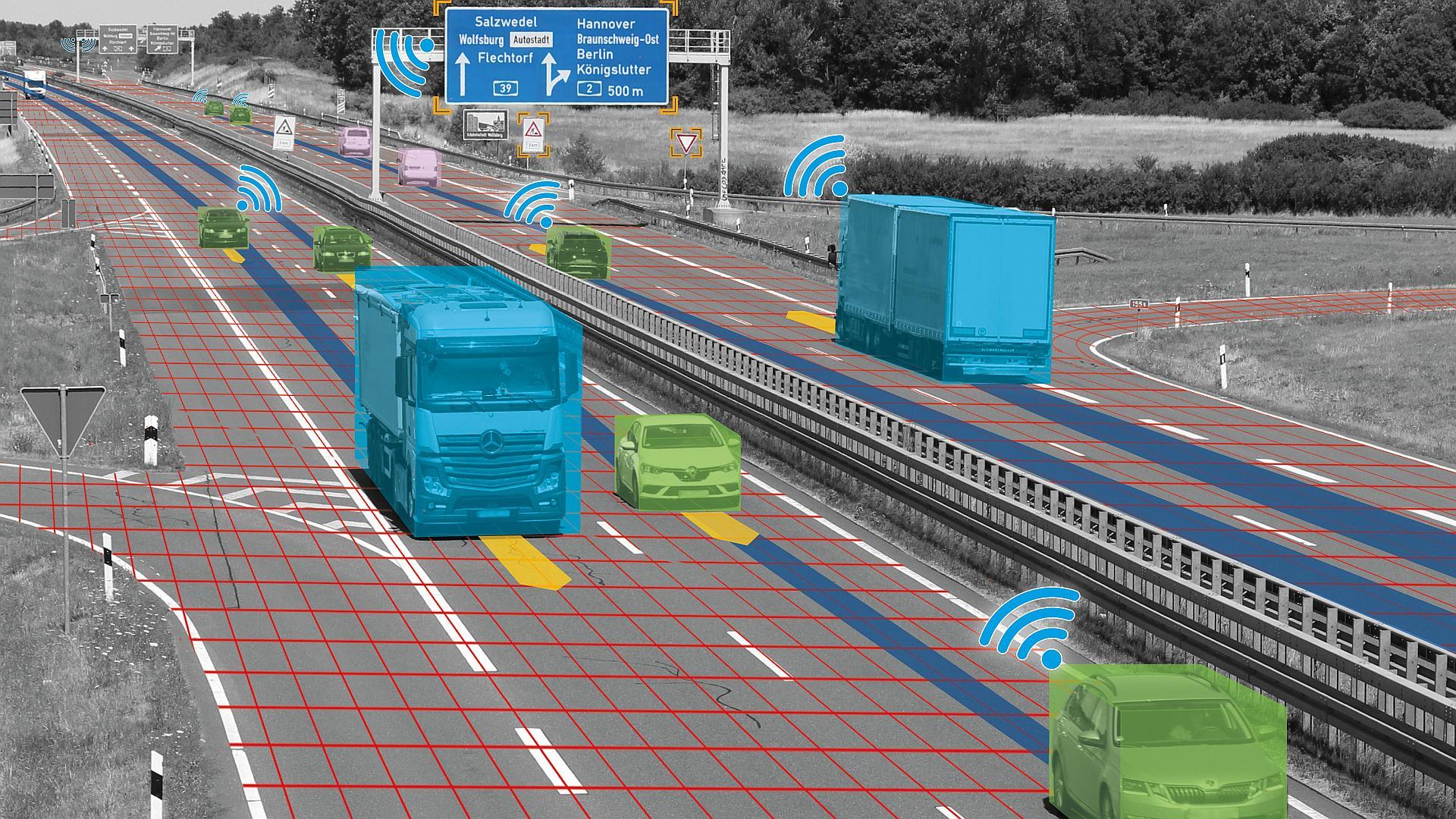
The next two years are decisive to gain technological leadership in Connected and Autonomous Vehicles. Enhanced cooperation and coordination of investment priorities are crucial to developing European-build software, hardware, AI models and autonomous driving ecosystems. European Connected and Autonomous Vehicles Alliance (ECAVA), launched during the Strategic Dialogue, will serve as a forum for setting a shared industry agenda. Executive-Vice President Henna Virkkunen will convene the first meeting in late October to kick off the work.
The dialogue also allowed the European Automotive Industry, social partners and other key stakeholders to provide input on upcoming Commission initiatives, including the review of the Regulation on the CO2 emission performance standards of cars and vans, the proposal on corporate fleets, regulatory simplification for passenger cars, as well as light commercial and heavy duty vehicles. Participants reviewed the implementation of the Action Plan, launched in March 2025, and assessed progress towards a thriving European automotive industry and a successful clean mobility transition.
Background
President von der Leyen launched the Strategic Dialogue on the future of the automotive industry in January 2025 to address profound changes in the automotive sector. The European Automotive Industry faces a rapidly evolving environment with new technologies and increased competition, alongside geopolitical uncertainties. Previous dialogues with President von der Leyen took place on 30 January 2025 and on 3 March 2025.
On 5 March 2025, the Commission introduced an Action Plan building on the Strategic Dialogue, detailing concrete actions to ensure a robust and sustainable automotive sector and help unleash its innovative power. The Action Plan is the result of an inclusive and collaborative process, which involved multiple discussions and stakeholder engagement initiated through the Strategic Dialogue. The plan also drew on insights from an open public consultation on the future of the European automotive industry, as well as the work of several working groups led by Commissioners Šefčovič, Hoekstra, Séjourné, Virkkunen, Mînzatu and Tzitzikostas.
Read the Memorandum
Download the Memorandum of Understanding
Quote(s)
The car of the future will be a supercomputer on wheels, powered by electrification and AI. The European Connected and Autonomous Vehicle Alliance, launched by President von der Leyen today, will bring together key stakeholders across the whole automotive value chain. Over the next months, we will intensify our efforts to foster EU-wide cooperation on software-defined vehicles, hardware computing, AI models and the development, piloting and testing and regulatory approval of autonomous driving solutions. I am looking forward to kicking off our work at the end of October.
This Memorandum of Understanding marks a first milestone in supporting Europe’s automotive industry to remain competitive, sustainable, and technologically sovereign. By uniting public and private stakeholders on focused, impactful R&I actions, we will accelerate the transition to zero-emission and automated mobility.
Today’s MoU is another important step in the implementation of the Industrial Automotive Action Plan. Stronger collaboration and better coordination between partnerships will accelerate key technological and service innovations for connected, automated and zero-emission mobility, ensuring that Europe’s automotive industry stays at the forefront of global competition.
Source – EU Commission
ACEA on the 3rd Strategic Dialogue on automotive convened: bold and fast action required
12 September 2025
Brussels, 12 September 2025 – ACEA welcomes the clear focus of today’s third Strategic Dialogue on the Future of the European Automotive Industry on the structural challenges facing both the sector and Europe as a whole.
“We agree with the Commission President that bold and fast action is required”, stated Ola Källenius, ACEA President and CEO of Mercedes-Benz. “No one has more at stake in the success of zero-emission mobility than Europe’s automakers. A thriving Europe needs us, and we need a thriving Europe.”
Most urgently, concrete steps are needed to make the CO2 policy framework for cars and vans fit for reality. “We are in this open and constructive dialogue to find a better way to green”, said Källenius. “We may not have cleared all differences yet, nor have the answers to all challenges. But we are positive to see the solution space is broadening, and confident the work of the next months will yield results. Europe simply has to deliver on all accounts: decarbonisation, competitiveness and supply chain resilience.”
The Commission recognised action is needed in three lanes: passenger cars, light commercial vehicles, and heavy-duty vehicles. In all these three sectors of road transport, electrification will be the dominant path to zero-emission. Doubling down on demand measures and enabling conditions, such as cheap energy and abundant charging infrastructure, therefore remains a prerequisite to make this systemic transition a success.
Furthermore, industrial and market perspective for technologies that help accelerate the transition should be reintroduced, and special recognition given to manufacturing small and efficient electric cars. The market situation for vans, with an electric share at just 8.5%, is also critical and needs dedicated attention too.
Trucks and buses represent just 3.5% of battery electric registrations today, as the supporting framework lags behind: Megawatt charging, grid capacity and purchase incentives remain underdeveloped, holding back progress in one of the hardest-to-abate sectors.
“Truck and bus makers are committed to Europe’s green transition: the vehicles are ready, but the enabling conditions are not” stated Christian Levin, CEO of Traton Group and Scania. “Further to today’s meeting we had a constructive exchange yesterday as well with Commissioners Hoekstra, Tzitzikostas and Jørgensen. We appreciate their recognition that our sector faces distinct challenges requiring dedicated attention, and we look forward to swiftly working together on urgent, tailored measures in a short-term follow-up meeting”.
Industry leaders indeed argue that the EU cannot afford to wait until 2027 to review CO2 standards for heavy-duty vehicles. Instead, urgent monitoring and action are needed to put road freight on track for climate neutrality.
In the margins of the Dialogue, a Memorandum of Understanding was signed between the Commission and key stakeholders to promote synergies between different innovation programmes. ACEA welcomes the intent to develop a Joint Undertaking for Automotive Research and Innovation, and stresses the importance of direct company involvement in the creation and steering of this Joint Undertaking from the beginning.
Source – ACEA