
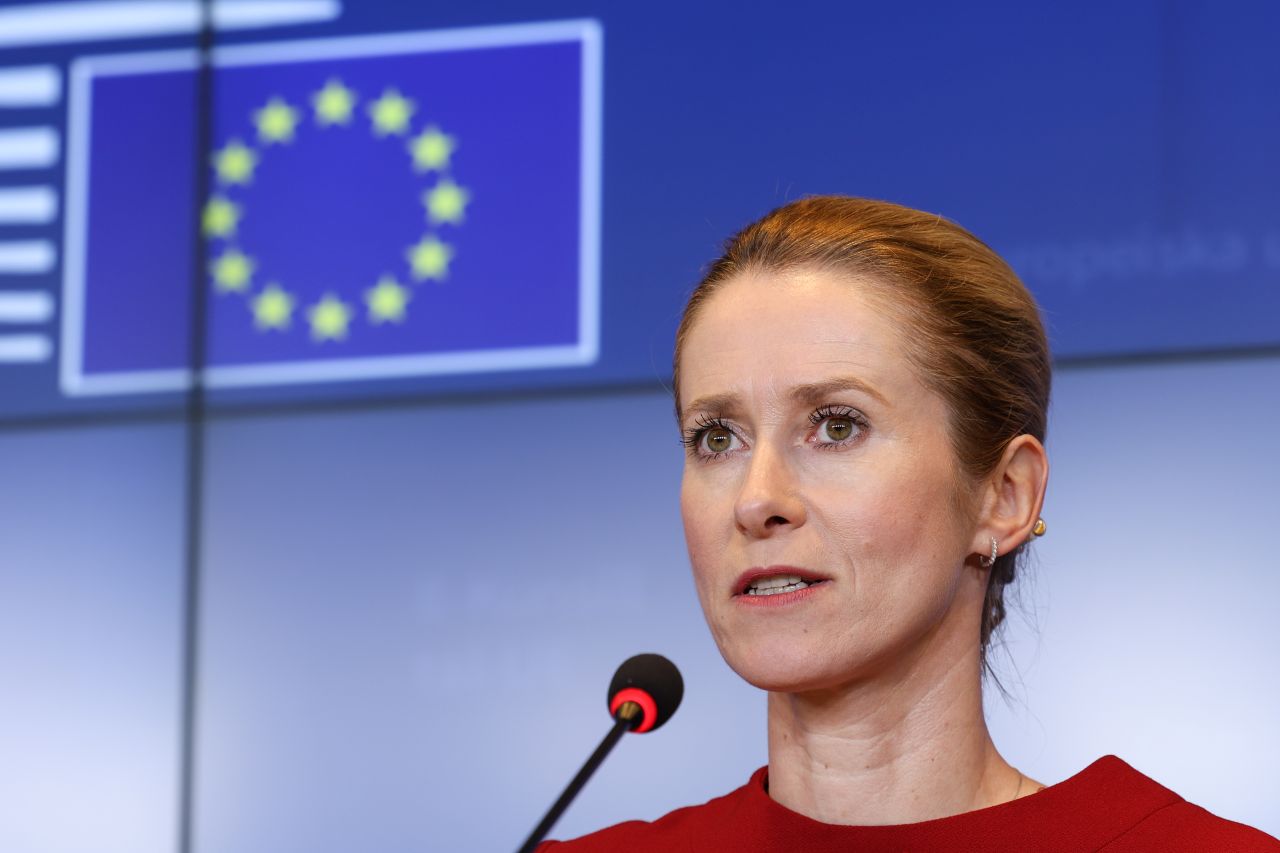
Luxembourg, 15 June 2026
Informal discussion with Armenian Foreign Minister
EU foreign ministers exchanged views over breakfast with the Armenian Minister of Foreign Affairs, Ararat Mirzoyan. The informal discussion took place against the backdrop of the 7 June parliamentary elections and focused on their outcome amidst unprecedented Russian interference and persistent hybrid attacks.
Elections delivered a clear message: the Armenian people voted for peace, sovereignty, and closer ties with Europe. Russia’s heavy pressure and economic coercion failed to sway the vote.
Kaja Kallas, High Representative for Foreign Affairs and Security Policy
Ministers discussed further ways to support Armenia’s resilience, its democratic path and economic diversification. The EU High Representative stressed that the EU is already working on a major economic support package to help Armenia withstand Russia’s unfair trading restrictions, and that the new EU partnership mission in Armenia will soon be launched.
- Armenia: Statement by the High Representative on behalf of the EU on the outcome of parliamentary elections (8 June 2026)
- Armenia: Council appoints Head of Mission for European Union Partnership Mission (press release, 9 June 2026)
- EU-Armenia summit, 4-5 May 2026
- EU relations with Armenia (background information)
Russia’s war of aggression against Ukraine
The Council discussed Russia’s war of aggression against Ukraine, after an informal exchange of views with the Minister of Foreign Affairs of Ukraine Andrii Sybiha. The Ukrainian minister – who was connected via videoconference – offered an overview of the situation on the ground, Ukraine’s most urgent needs, and an update on the overnight Russian attack, including on the Kyiv-Pechersk Lavra cathedral, one of the most significant religious sites of the country and a UNESCO World Heritage one.
The ensuing ministerial discussion showed that EU ministers were united in their willingness to keep supporting Ukraine and increasing pressure on Russia.
Western sanctions have already cost Russia an estimated €1 to €1.3 trillion. These euros are not spent on waging war on Ukraine. Increasing the pressure also means isolating Russia internationally. As Russia bombs cathedrals, Europe should not roll out the red carpet for Russian artists and athletes that support the Kremlin’s war. Culture and sport should not be a tool to whitewash aggression.
Kaja Kallas, High Representative for Foreign Affairs and Security Policy
In light of the Russian actions aimed at destabilising, undermining or threatening the sovereignty and independence of the Republic of Moldova, including actions aimed at subverting its democratic processes, the Council decided today to impose restrictive measures against six individuals. The Council adopted 81 additional thematic listings – 34 individuals and 47 entities – targeting Russia’s military-industrial complex, energy revenues, propaganda efforts and human rights violations.
Ministers also touched on the newly proposed 21st sanctions package against Russia, and agreed that work on it must advance swiftly.
- Russia’s war of aggression against Ukraine: new EU sanctions target energy revenues, the military-industrial complex, propaganda and human rights violations (press release, 15 June 2026)
- Russia’s war against Ukraine (background information)
- EU military support for Ukraine (background information)
- EU solidarity with Ukraine (background information)
Situation in the Middle East
The next agenda item focused on the situation in the Middle East in light of the latest developments in the region.
Iran
The Council took note of the recently announced framework agreement between the United States and Iran to extend the current ceasefire by 60 days and restore freedom of navigation in the Strait of Hormuz, which should remain open and toll-free. It also highlighted the need for further work on curbing Iran’s nuclear and ballistic missiles programmes.
The announcement by United States and Iran of a deal to end the war and reopen the Strait of Hormuz marks a potential breakthrough. It can give much-needed space for deeper negotiations on Iran’s nuclear programme and other critical issues. The toughest phase of the talks still lies ahead.
Kaja Kallas, High Representative for Foreign Affairs and Security Policy
EU foreign affairs ministers also took stock of the outreach to and coordination with partner countries, including of the High Representative’s recent visit to Pakistan and contacts with the Gulf countries. In this context the High Representative stressed that, from economic leverage to nuclear expertise, the EU stands ready to contribute to a sustainable resolution.
- Statement by the High Representative on behalf of the EU on the ceasefire agreed by the United States and Iran (9 April 2026)
- Leaders’ statement on the two-week ceasefire concluded between the United States and Iran (press release, 8 April 2026)
- Timeline – Iran and the Middle East (background information)
Lebanon
The Council discussed the dire humanitarian situation in Lebanon, amid the continued hostilities between Israel and Hezbollah, and exchanged views on EU support for Lebanon and its people, including through the recently adopted bilateral assistance measure for the Lebanese Armed Forces under the European Peace Facility (EPF) worth EUR 100 million.
Ministers further emphasised the importance of guaranteeing the sovereignty and territorial integrity of Lebanon and discussed the possibility of enhanced engagement of the EU in the country, including via a future dedicated CSDP mission.
- Statement by the High Representative on behalf of the EU on Israel and Lebanon (6 June 2026)
- European Peace Facility: Council adopts EUR 100 million assistance measure in support of the Lebanese Armed Forces (press release, 4 June 2026)
- European Council conclusions, 19 March 2026
- EU position on the situation in the Middle East (background information)
- EU sanctions against Iran (background brief)
Israel and Palestine
The Council held an exchange of views on Israel and Palestine. Ministers expressed their deep concern over the critical humanitarian situation in Gaza, stressing the need to ensure access to humanitarian aid, and touched upon the EU support for the reform process of the Palestinian Authority ahead of the Palestine Donor Group in July.
Ministers also discussed the deteriorating situation in the West Bank, in particular the growing violence and the expansion of the Israeli illegal settlements. Following the adoption of additional restrictive measures against extremist Israeli settlers and Hamas leading figures on 28 May 2026, the Council also exchanged on further policy options, including new listings and trade-related measures.
- Extremist Israeli settlers: EU lists four entities and three individuals (press release, 28 May)
- EU position on the situation in the Middle East (background information)
- EU humanitarian support for Palestinians (background information)
- European Council conclusions, 19 March 2026
EU-China relations
Over lunch, EU foreign affairs ministers discussed the state of play of relations between the European Union and China against the backdrop of current geopolitical developments. The exchange in FAC focused on foreign and security aspects, ahead of the European Council of 18-19 June 2026.
- EU-China summit, 24 July 2025 (meeting page)
- EU-China trade: facts and figures (background information)
- European Council conclusions, 29-30 June 2023
From distorting subsidies, growing trade imbalances, and a near monopoly of critical raw materials, the list of issues remains long. Reducing dependencies with China won’t be easy or cheap, but it’s necessary and urgent.
Kaja Kallas, High Representative for Foreign Affairs and Security Policy
Concerning foreign aspects, the High Representative stressed that Beijing remains a decisive enabler of Russia’s war against Ukraine and that the EU is carefully assessing new and verified reports according to which the Chinese military would have been training Russian military personnel to fight in Ukraine.
The Council also discussed how to counter China’s disinformation activities and strengthen European defence supply chains.
On the Indo-Pacific, EU ministers reaffirmed that the United Nations Convention on the Law of the Sea clearly defines lawful conduct and serves as a foundation for security in the region.
- China: High Representative/Vice-President speaks to State Councillor/Foreign Minister Wang Yi, 3 April 2026 (EEAS website)
- EU-China summit, 24 July 2025 (meeting page)
- 4th EEAS Annual Report on Foreign Information Manipulation and Interference Threats
- EU-China trade: facts and figures (background information)
Current affairs
Under current affairs, the Council touched upon the process of appointing a new High Representative for Bosnia and Herzegovina.
Ministers were also updated on the resurgence of Ebola virus disease in the Kivu region of the Democratic Republic of Congo.
Any other business and other decisions
Under other business:
- Poland briefed ministers on the recent White Paper on Russian Acts of Sabotage and Subversion against Members of the Council of the Baltic Sea States
- Romania informed member states on the priorities of the incoming Romanian Chairmanship-in-Office of the South-East European Cooperation Process (SEECP)
- Romania and Bulgaria briefed their counterparts on the Black Sea Maritime Security Hub
In light of the Russian-funded operations aimed at disrupting the parliamentary elections of September 2025 in the Republic of Moldova, the Council decided today to impose restrictive measures against six individuals.
The Council formally concluded the agreement between the EU and Canada, thus making Canada the first non-European country to participate in the SAFE procurement instrument.
The Council also adopted conclusions on Global Gateway, reaffirming it as the European Union’s worldwide investment strategy for building mutually beneficial partnerships and mobilising public and private resources to bridge the global investment gap.
Meeting files
- List of A items, non-legislative activities
- Provisional list of A items
- Provisional agenda
- Background brief
Outcome documents
Press releases
- Russia’s war of aggression against Ukraine: new EU sanctions target energy revenues, the military-industrial complex, propaganda and human rights violations
- Republic of Moldova: Council lists six individuals for actions destabilising the country
- Global Gateway: Council adopts conclusions on the EU’s global investment and partnership strategy
- SAFE: Council concludes agreement with Canada
Source – EU Council
Foreign Affairs Council: Press remarks by High Representative Kaja Kallas at the press conference
Check against delivery!
Good afternoon, everybody.
We just concluded the Foreign Affairs Council. First, we had a breakfast on Armenia. We had Foreign Minister Mirzoyan joining us and we talked about the elections but also what happens next.
Last week’s elections delivered a clear message. The Armenian people voted for peace, sovereignty and closer ties with Europe. Russia’s heavy pressure and economic coercion failed to sway the vote. Today, Ministers discussed how we can further strengthen Armenia’s resilience and economic diversification. The EU is already working on a major economic support package to help Armenia withstand Russia’s unfair trading restrictions. Our new EU Partnership Mission in Armenia will soon begin work to help address cyber-attacks, illicit financial flows, and other threats.
We saw very heavy attacks overnight in Ukraine by Russia once again, and it made it clear that Moscow has no intention of ending this war. The strikes yet again killed civilians and damaged Kyiv’s historical cathedral, a direct assault on Ukraine’s 1000-year-old heritage. The strike also exposed the absurdity of Russia’s claims to be the defender of Christianity.
There is no military logic in these attacks. On the battlefield, Putin’s war has reached a dead end, so Russia is increasingly striking civilians. Ministers were united that we must stay on course by supporting Ukraine and increasing pressure on Russia.
And we continue doing that. Today, we approved another batch of sanctions that will strike at the heart of Russia’s industrial-military complex, the shadow fleet, and its hybrid warfare networks. We also adopted new listings targeting those who seek to destabilise, undermine and threaten Moldova.
In parallel, Ministers were clear that work on the broader 21st sanctions package must swiftly advance. Every measure shrinks Russia’s room for manoeuvre and the numbers speak volumes. Western sanctions have already cost Russia an estimated €1 to €1.3 trillion. These euros are not spent on waging war on Ukraine.
Increasing the pressure also means isolating Russia internationally. As Russia bombs cathedrals, Europe should not roll out the red carpet for Russian artists and athletes that support Kremlin’s war. Culture and sport should not be a tool to whitewash aggression.
Later today, Ukraine and Moldova will take a decisive step towards joining the EU. Opening the first chapters of EU accession negotiations is a major milestone. Both countries have delivered on difficult reforms under extraordinary circumstances. Ukraine and Moldova’s future lie in the European Union. Their membership will make also Europe stronger.
On the Middle East. The announcement by the United States and Iran of a deal to end the war and to re-open the Strait of Hormuz marks a potential breakthrough. It can give much needed space for deeper negotiations on Iran’s nuclear programme and other critical issues. The toughest phase of the talks still lies ahead.
In recent days, I have spoken to my Iranian and Gulf counterparts. Today, EU Foreign Ministers discussed how the EU can be closely involved in the next phase. From economic leverage to nuclear expertise, the EU stands ready to contribute to a sustainable resolution. Ministers commended the diplomatic efforts of the mediators, especially Pakistan and Qatar, and regional partners which made the deal possible.
Lebanon has seen an escalation in fighting in the recent weeks. The EU has approved a 100-million-euro assistance package for the Lebanese Armed Forces to strengthen state authority and support the disarmament of Hezbollah. We are also advancing work on a new EU mission in Lebanon.
In Gaza and the West Bank, the situation remains dire. Last month, Ministers agreed on sanctions against extremist Israeli settlers and Hamas figures. Many Member States have also proposed to sanction Minister Ben-Gvir but no consensus on that was reached today.
On the issue of trade with illegal settlements, many Member States called for proposals from the Commission. I will convey this request and ask the Commission to prepare, ahead of the next Foreign Affairs Council, a list of options for possible trade measures, including measures aimed at preventing imports of goods originating from illegal settlements. We will also seek the Commission’s assessment on the scope of issues related to the rules of origin.
Lastly, on China. From distorting subsidies, growing trade imbalances and a near monopoly on critical raw materials – the list of issues remains long. Reducing dependencies with China will not be easy or cheap, but it is necessary and urgent. Some Member States have called on the EU to use our trade tools more forcibly.
Today, Ministers focused on the foreign and security aspects of our relations with China. Beijing remains a decisive enabler of Russia’s war against Ukraine, and in response we sanctioned several Chinese entities today. We have also now verified reports that the Chinese military has been training Russian military personnel to fight in Ukraine. We are carefully assessing the implications.
Furthermore, Ministers discussed countering China’s disinformation activities and strengthening European defence supply chains. On the Indo-Pacific, Ministers reaffirmed that the United Nations Convention on the Law of the Sea clearly defines lawful conduct and serves as a foundation for security in the region. All those issues require pragmatic dialogue with Beijing. There was unity among Ministers that we will defend European interests.
Later today, we will also hold an EU-Egypt Association Council, actually it is right after this press conference, but before that I will take your questions.
Link to the video: https://audiovisual.ec.europa.eu/media/video/I-290918
Q&A
Q. High Representative, Israel said that it is not withdrawing the IDF forces from Lebanon, Syria, and Gaza. How worried are you that this stance can jeopardise the peace deal with Iran, and what the EU can do about it. And secondly, if I may, do you have a clear view today on where the Member States stand when it comes to trade measures against illegal settlements, and is there a majority that support this eventually?
We discussed, of course, the issue of Lebanon. Also, Ministers were saying that Lebanon should be covered by the ceasefire, because it is really needed for this.
Q. My second question is related, because when you said that trade measure was discussed today, I would like to know if you have a clear view of where the Member States stand when it comes to the trade measures against illegal settlements, and if you think there will be a majority that support this?
We were listening what the Ministers were saying around the table, and there was a clear understanding that the options need to be clear for the Ministers. So, I will take this back to the College to discuss, because there was clear need in the room to come with answers to these questions that were presented. Also, when it comes to how Member States should operate with current products that are on the market. Clearly this is what I am taking back to the Commission.
Q. This morning Mr Barrot but also Mr Macron said the Franco-British mission could be operated in a few days in the Strait of Hormuz. Is ASPIDES ready to operate with the mission?
We have had intensive discussions on Operation ASPIDES. We did not have it today, but we had it before with the Foreign Ministers, as well as Defence Ministers. The good news is that we now have more ships also in the Operation ASPIDES. The focus of Operation ASPIDES is to be the Red Sea, as it is right now. As the Franco-British Coalition then will operate in the Strait of Hormuz, and clearly as the Houthis have also said that they will increase attacks, these two operations also go hand in hand and complement each other.
Q. First, my question would be about something that you just mentioned about Russian culture and the interest of the European Union to prevent the representation of Russia, Russian artists, and so on, on the territory of the European Union. Well, as far as I know, tonight Russian singer Anna Netrebko is going to perform right across the street from here. I just checked it is sold out, was not cancelled. So, what is your comment on that? And the second one is on the 21st sanctions package against Russia, and one of its components is the ban of entry for Russian combatants. It is a very interesting measure, and our audiences respond to this very actively, and of course, we would like to know what is the stand of the discussion right now? Where do you see the challenges for that? Are they political? Are they technical? What are the chances of this measure being implemented at all?
Like I said, considering that Russia is bombing cultural heritage sites for a fifth year in a row, there should be no red carpet rolled out for the Russian artists, and it is very, very unfortunate to hear that this is the case. It is the case in some of the Member States who do not feel that this war is really at their doorstep. So that is why it was important to raise it again, also with all the Member States that we have around the table to show, and what Member States were also saying. Considering the overnight attacks on the UN culture heritage site, this is also something that illustrates this very, very much. So, of course if we do not have complete sanction or complete ban, then the Member States are also deciding, but it is very, very unfortunate that this is taking place, if you say that it is true. We also saw what happened in the Venice Biennale, so it is a valid lesson for everybody. The war is not over—Russia has not changed its goals. We should not act as business as usual with them. When it comes to the Russian combatants ban, now the Commission’s proposal is on the table. We have the intelligence of people who have been fighting in the army, so clearly I am not a visa or visa regulations expert, but I am sure that it is possible to put a whole Schengen ban for these people, a complete list of these people who have been participating in the war, because it is not only a question of the war in Ukraine, it is actually the question of our own security. Because these people who have been fighting against Ukraine coming to European territories, I am sure will create a lot of problems here that we should avoid from the outset.
Q. You mentioned last night Russian strikes on Ukraine, do you see kind of message from the Kremlin on the day of the opening negotiation, for accessions of Ukraine to the EU? And secondly, did you discuss the EPF for Ukraine? Are there any news or decision regarding this file?
Russia is clearly sending a message that it does not want to end this war, and whether we are tying this to the Ukrainian decision about their future, I do not think that they should have a say about any other country’s future but their own. Looking at the state of the economy or social affairs in Russia, I would recommend them dealing with their own problems. On the EPF, yes, we have tabled the compromise, taking into account the initial idea of the EPF being a burden-sharing tool, but also taking into account that it has been blocked for nearly three years, and taking into account that Ukraine has needs. We had a discussion today as well. We did not reach a political agreement yet, but I was stressing and pushing that we would have a political agreement before the start of summer in European terms. So hopefully we manage to get to this point.
Link to the video: https://audiovisual.ec.europa.eu/media/video/I-291299
Source – EEAS